
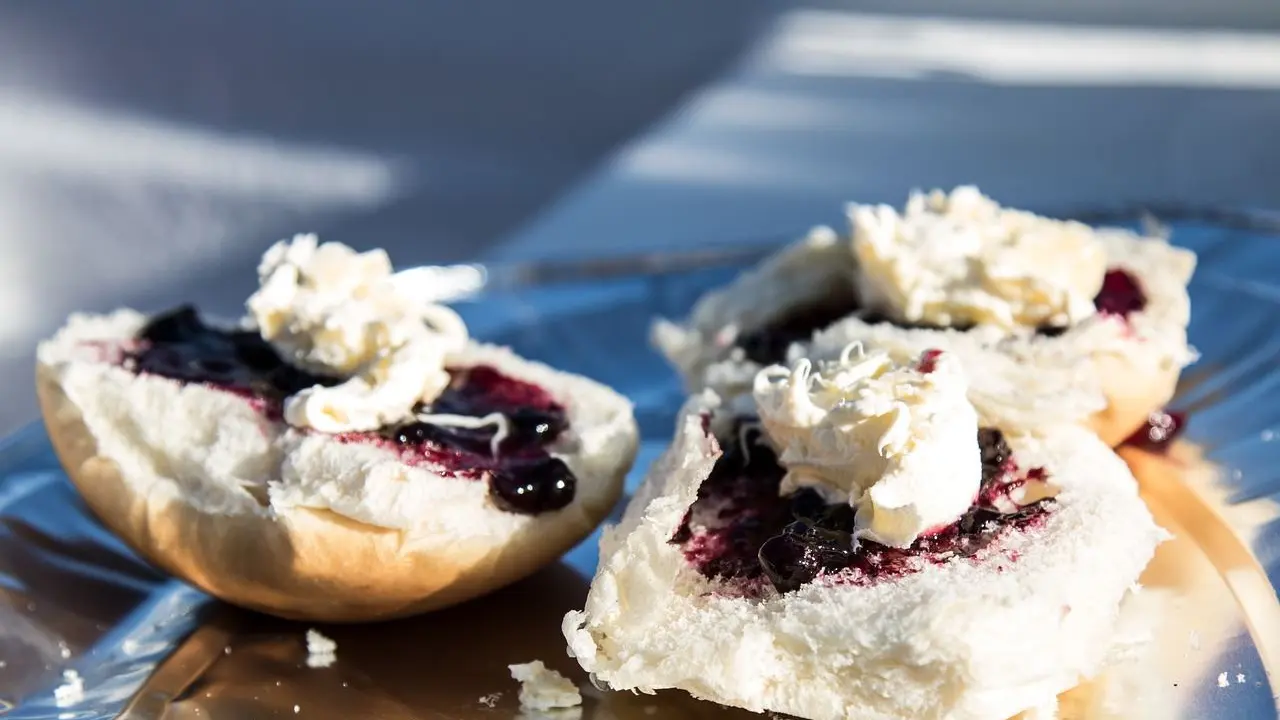
Not sure what the rule is for a Cornish cream tea jam or cream first? In Cornwall, jam goes on first, then clotted cream. Devon swaps the order, so pick the side you are standing on.
For more local eating ideas, browse the wider topic of cornwall food and drink.
| Item | Value |
|---|---|
| Blind taste test: jam first preferred | 69% of 52 blindfolded participants |
| Blind taste test: cream first preferred | 31% |
| UK adults naming the Cornish way best | 80% (four in five) of 1,852 adults surveyed |
| Devon residents preferring jam first | 62% |
| Most popular jam in the survey | Strawberry, 67% of the vote |
| Supposed origin of the cream tea | Tavistock Abbey, 11th century |
The figures come from a survey commissioned by a Cornish cream tea seller (The Cornish Company) and an article by Tasting Table. They can change, so check the source before you rely on them.
What a Cornish cream tea includes
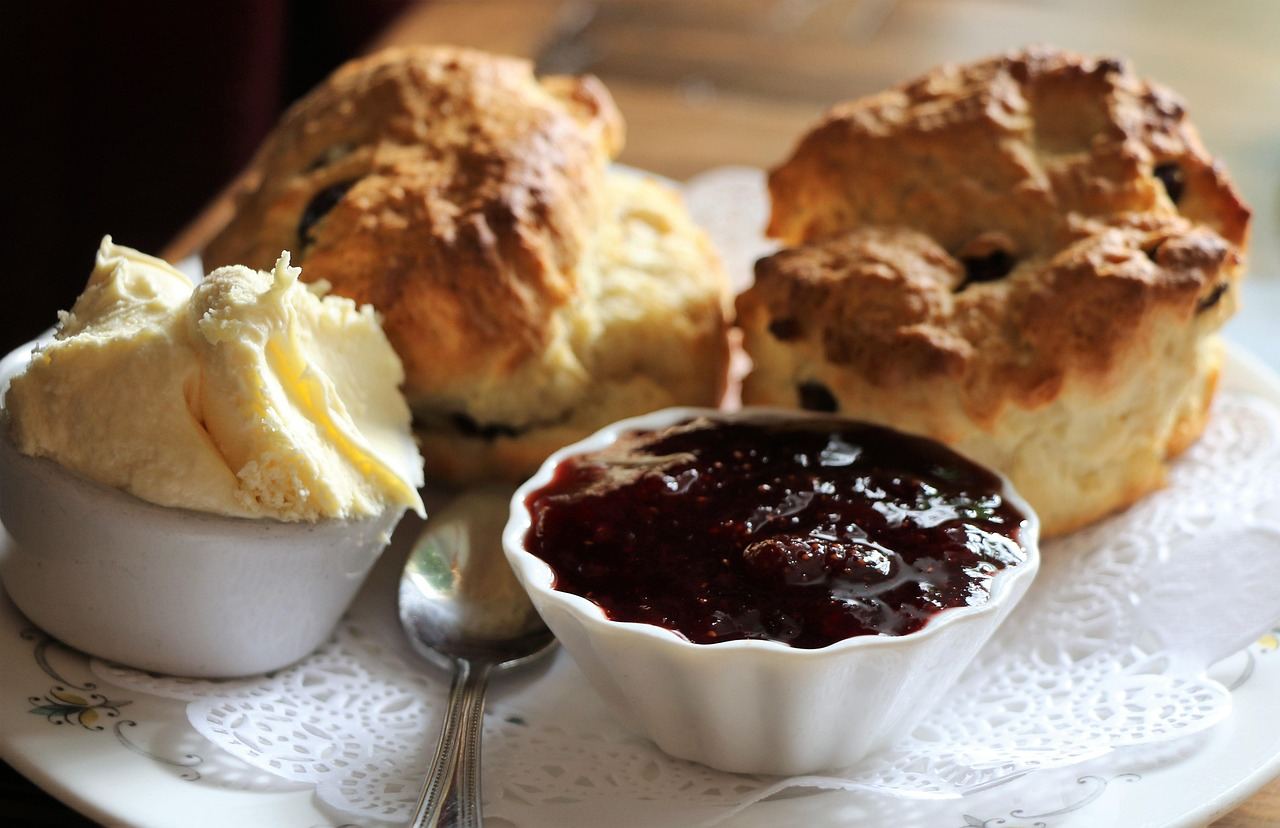
A classic cream tea is scones, clotted cream and jam with a pot of tea, as described by Go South West England. The ingredients stay the same wherever you eat it, and only the order of the toppings changes.
The star of the plate is clotted cream, which The Valley describes as a yellowish cream with a harder crust on the top. It originates from the South West, and some other areas simply use whipped double cream instead.
A typical plate holds:
- Warm scones, split in half
- Clotted cream
- Strawberry jam
- A pot of tea
The Cornish way and the Devon way
The only real difference between the counties’ versions is the order in which the jam and cream go onto the scone, according to The Valley. Everything else on the plate is the same.
The Cornish Company, which sells cream teas, sets out the Cornish method like this:
- Split your warm scone in half, ideally with your fingers rather than a knife.
- Spread a generous layer of strawberry jam directly onto the warm crumb.
- Crown it with a thick dollop of Cornish clotted cream.
The Devon way reverses it. As The Valley puts it, Devon spreads the cream on first like butter, then adds a dollop of jam to the top.
The dividing line is the River Tamar, and The Cornish Company says your answer depends on which side of it your tastes align with. One West Country writer at Go South West England simply goes cream first in Devon and jam first in Cornwall.
What do the survey and blind taste test show?
The Cornish Company commissioned a nationwide study of 1,852 British adults, plus a blind taste test of 52 participants. The headline results were:
- 69% of blindfolded participants picked the jam-first scone, against 31% for cream first, in the taste test.
- 80% of UK adults named the Cornish way, jam before clotted cream, as best, in the survey.
- 62% of Devon residents admitted they prefer jam first, the same source reports.
- Strawberry jam took 67% of the vote, followed by raspberry at 26%, per the survey.
Read these with care. The company says it hand-packs Cornish cream teas, and its own golden rule is jam first, so the study is not neutral (source). The taste test group was also small.
A more relaxed view comes from Tasting Table, which says that, honestly, neither way affects the taste.
Why people defend each order
The case for jam first
Supporters of the Cornish order give three practical reasons, listed by The Valley:
- It is easier to spread the jam on first and then add cream.
- The jam doesn’t slide off the cream.
- You can taste the cream better.
There is also a heat argument. The Cornish Company says the heat from a warm scone makes cold cream melt almost instantly when it goes on first.
The case for cream first
Devon supporters see clotted cream as a stand-in for butter. The Valley also lists that the jam will lie flatter on the cream, making it a bit easier to eat.
A reader quoted by Go South West England argues that proper thick clotted cream needs a firm surface to be spread. The same reader adds that cream put onto jam will just sit there in blobs or fall off.
Where did the debate start?
Devon points to Tavistock Abbey, where Tasting Table says the supposed first cream tea was served in the 11th century. The Earl of Devon apparently rewarded the workers with bread, clotted cream and strawberry jam.
Devonians insist the cream went down first as a base. Cornwall disputes that, and Tasting Table also reports that the late Queen Elizabeth II revealed she prefers the Cornish way.
The rivalry still bites. The Valley reports that in 2018 the National Trust had to issue an apology after an advert at the Cornish property Lanhydrock House depicted a scone with jam on top.
Making scones at home, either way round
The Valley shares a Cornish scone recipe with these ingredients:
- 500g plain flour
- 100g caster sugar
- 100g butter, diced
- 250ml milk
- 3 teaspoons baking powder
- A pinch of salt
- Egg wash for the tops
The method on the same page runs as follows:
- Preheat the oven to 200C and line a baking tray.
- Sieve the dry ingredients, rub in the butter with your fingertips, then slowly mix in the milk until it forms a dough.
- Knead lightly, roll the dough to around 2.5cm thick and cut 5cm circles.
- Brush with egg wash and bake for 15 minutes.
The recipe’s own advice is to serve with jam on first, then the cream. If you are planning a wider day of eating, the guide to cornish pasty history covers the savoury classic, and the one on cornish fish and chips covers the seaside favourite.
Frequently asked questions
Is it jam or cream first in Cornwall?
Show answer
Jam goes on first, then clotted cream, as The Valley explains. Devon does it the other way round.
Does the order change the taste?
Show answer
Opinion is split. Tasting Table says neither way affects the taste, though in a small blind test 69% preferred jam first, according to The Cornish Company.
Do I have to use clotted cream?
Show answer
Clotted cream is the South West tradition. The Valley notes that some other areas of the UK use whipped double cream instead.
Which order did the Queen prefer?
Show answer
Tasting Table reports that the late Queen Elizabeth II revealed she prefers the Cornish way. That is jam first, then clotted cream.
What should I do when I am not sure?
Show answer
Follow the county you are in. The writer at Go South West England recommends cream first in Devon and jam first in Cornwall.